
Two-story layouts
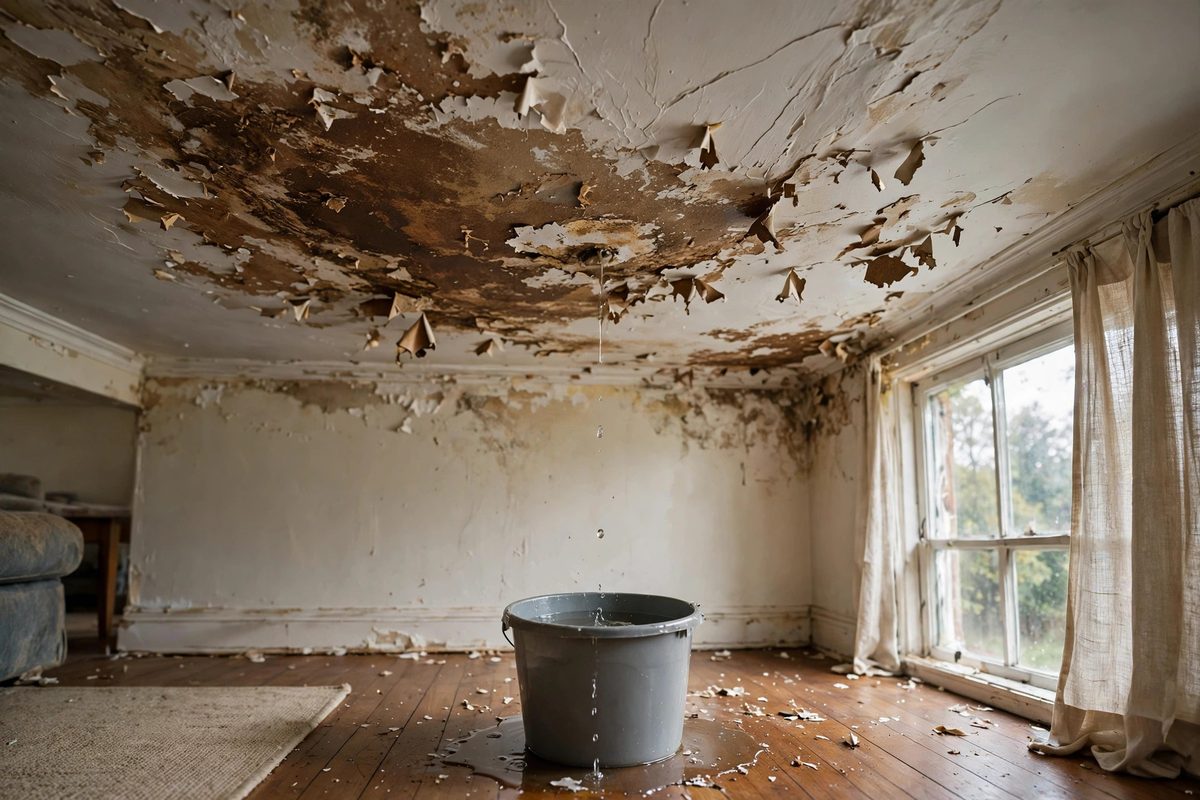
Upstairs baths and laundry over living space turn small failures into ceiling stains below.
OngoingA stained ceiling, a musty basement, a sewage backup, or a flooded lower level all need the same thing first: the water stopped, the wet footprint mapped, and drying verified — not a cosmetic fix over hidden moisture. One call connects you with guidance for water damage repair across Herriman and nearby communities.
Water inside now?
Do this firstWater damage repair in Herriman, UT starts with stopping the water and mapping how far it traveled — because the visible stain is almost never the full footprint. Water wicks up drywall, runs along joists, hides in wall cavities, and settles in the lowest level, so a ceiling stain, a musty basement, and a warped baseboard can all come from the same event. That mapping decides whether the job is extraction, drying, mold work, drywall repair, or a combination.
This site covers warning signs, safe first steps, and how a visit typically unfolds so you can call (801) 555-0132 with useful details. Start with ceiling water damage repair, emergency water extraction, or mold remediation.
From a ceiling stain to a flooded basement — each guide explains the work and what to have ready on the call.
Stains, sagging, and drips from the room above.
View service →02Containment, removal, cleaning, and drying at the source.
View service →03Air and surface sampling measured against outdoor levels.
View service →04Contaminated water handled safely, in sequence.
View service →05Growth and moisture mapped before any work starts.
View service →06Standing water removed fast, before it spreads.
View service →07Seep, humidity, and past-flood growth in basements.
View service →08Wet drywall assessed, dried, and restored.
View service →09Low-airflow closet growth and its shared-wall source.
View service →10Extraction, removal, cleaning, and verified drying.
View service →Pick what you are seeing. You get context and a focused Herriman guide.
Water from above — plumbing, a room upstairs, or an exterior path.
Act soonMusty basementSeep, humidity, or a past flood feeding growth at the wall-floor joint.
UrgentSewage backupContaminated water needs isolation and safe handling, not mopping.
Act soonVisible mold growthGrowth with a moisture source behind it — removal plus source control.
Act soonSoft or stained drywallBoard that stayed wet needs assessment before paint or patching.
UrgentStanding waterBulk water out first, before it wicks further into walls and floors.
Water does not stay where it lands. It wicks up drywall, runs along joists and pipes, settles into the lowest level, and hides in wall cavities and under flooring. That is why the visible damage is almost always smaller than the wet footprint, and why moisture readings — not eyesight — define the real scope of a job. A ceiling stain, a warped baseboard, and a musty basement corner can all trace to one event.
Two-story homes and finished basements, both common in Herriman, make spread harder to see. Upstairs failures become downstairs ceiling problems, and finished lower walls hide cavity moisture behind drywall that looks normal. For neighborhood-specific context, see Rosecrest and South Jordan.
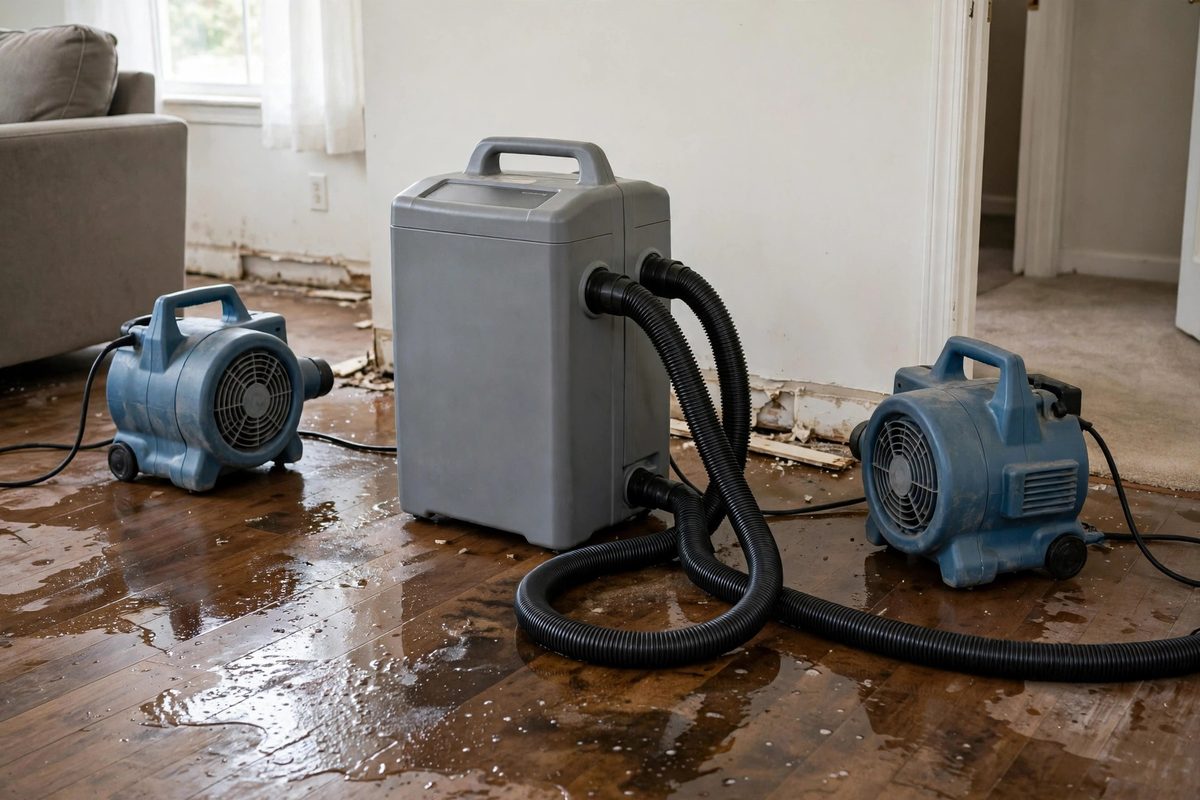
Drying runs until moisture readings stabilize, not until surfaces feel dry. Air movers and dehumidification do the work, and readings on walls, floors, and cavities track it. Surface-dry is not dry: a wall that feels dry while its cavity is still damp will show the problem again, usually as a returning stain or new growth. Read emergency water extraction for the first phase and mold inspection for the mapping phase.
On the call, you will be asked for the water type, the spread, the timing, and whether sewage is involved. A visit typically includes safety checks, source control, moisture mapping, and a clear recommendation: extraction, drying, mold work, drywall repair, or a combination — with approval before work proceeds.
The same clear steps for a small ceiling stain or a flooded basement in Herriman.
Describe where the water is, when it appeared, and your Herriman-area ZIP.
Shutoff guidance while you wait, where it can be done safely.
Bulk water out, then moisture readings define the full footprint.
Drying to verified readings, with mold and material work as mapped.
Drywall and finishes restored, with a recheck so damage does not return unnoticed.
Two-story layouts, finished basements, foothill slopes, and Utah seasons show up again and again in water damage calls.
Upstairs baths and laundry over living space turn small failures into ceiling stains below.
OngoingLiving space below grade hides cavity moisture behind drywall that looks normal.
OngoingSloped lots push storm water at downhill walls, window wells, and joints.
Peak: storms & thawWinter freeze cycles stress pipes and joints; summer storms drive water at exterior paths.
Peak: winter & summerWater finds drywall edges, subfloors, and wall cavities. A slow ceiling drip saturates insulation and joists. A damp basement wall feeds growth behind finished drywall. Electrical fixtures and gas equipment near moisture create safety risk beyond cosmetic damage.
Waiting also discards diagnostic clarity — if everything is soaked, it is harder to tell the source from the spread. Early photos and a timely call protect both the home and the repair decision.
| Factor | Why it matters |
|---|---|
| Water type | Clean water differs from gray water and from sewage contamination. |
| Spread | One room differs from water that traveled across levels. |
| Materials | Drywall, insulation, and flooring each dry and recover differently. |
| Finished vs unfinished | Finished walls hide cavity moisture that unfinished walls show. |
| Mold involvement | Growth adds containment, removal, and cleaning scope. |
We do not publish prices on this site. Discuss scope directly on the call or visit.
Local pages explain how housing layout and ground shape show up in real water damage calls.
Newer two-story homes where upstairs leaks become ceiling stains.
Foothill slopes, window wells, and walkout basements.
Shaded walls that dry slowly, and gutters that matter more.
Shared walls and stacked plumbing in townhomes.
Finished basements used as family living space.
Foothill-edge homes, garage utilities, and wind-driven rain.
Sloped lots, window wells, and one-wall basement seepage.
Neighboring city east of Herriman, mixed older and newer homes.
Neighboring city southeast of Herriman, low ground and basements.
Neighboring city north of Herriman, including Daybreak.
You call (801) 555-0132, describe the water or stain, and get practical shutoff guidance if water is active. A visit focuses on source control and moisture mapping first. Recommendations stay specific to your home — whether that means extraction, mold work, or drywall repair.
Ask questions about cleanup expectations and the visit process during the call.
If it is safe, stop the water at its source — a shutoff, a moved appliance hose, or a contained drip — and move belongings out of the water path. Photograph the damage and the apparent source, then call with the water type and spread.
As fast as safely possible. Standing water widens its footprint every hour: it wicks up walls, swells flooring, and soaks what sits on the floor. Extraction first limits everything that follows.
Timing is the best clue: stains tied to showers, laundry, or fixture use point to plumbing above, while stains tied to rain point to the roof or exterior. Moisture mapping confirms which path the water took.
When growth is visible and the source is clear, remediation can proceed without testing. Testing helps when growth is hidden, when documentation is needed, or for post-remediation clearance — see mold testing and mold inspection.
Surface drying is not the same as cavity drying. Basements dry slowly by nature, and wall cavities, insulation, and flooring can stay wet long after the floor feels dry. Moisture readings confirm dryness.
Where the water or stain is, when it appeared, what sits above or beside it, whether sewage is involved, whether the walls are finished, and your Herriman-area ZIP. Photos help triage.
Herriman, UT and nearby communities — ceilings, mold, extraction, sewage backup, and flooded basements.
Call (801) 555-0132Most calls start with a brown ring on a living room ceiling, a musty smell at the bottom of the basement stairs, or a warped baseboard on a finished lower wall. Others notice a toilet gurgling when the washer runs, or a window well holding water after a storm. A smaller group finds warped flooring near a utility room and only later traces moisture back to a slow appliance failure.
Whatever the discovery path, the useful next move is the same: stop additional water if you can, capture photos, and call with the water type plus symptom timing. The service and area pages on this site exist so you can name the problem accurately — ceiling versus basement versus sewage, source versus spread — before a visit starts.
If you are comparing whether to dry, clean, or rebuild, use the specific service page together with your area page. That pairing keeps the conversation practical and specific to Herriman, UT conditions rather than generic national advice.
Winter freeze cycles stress pipes, joints, and appliance hoses, and the first hard cold stretch often reveals a weak connection that was fine in autumn. Summer storms drive water at exterior joints, window wells, and low ground, and the damage shows up on the downhill wall or the window below the well. Spring thaw combines both: melt water plus still-frozen ground pushes seepage at wall-floor joints.
Keep shutoff locations known year-round. A valve hidden behind storage turns a manageable leak into a stressful scramble. Label the main shutoff and the fixture shutoffs with tape, and share those locations with everyone in the household so anyone home can act quickly.