
What mold remediation means
Mold remediation is the process of removing mold growth and the materials it has damaged, cleaning the affected area, and returning moisture levels to normal so growth does not restart. It is different from simply killing or covering mold: dead mold and stained material left in place can still affect indoor air, and paint over growth hides the problem without removing it.
Remediation always starts with the water. Mold needs moisture to grow, so a remediation plan that ignores a leak, a seep, condensation, or a past flood is a plan that will be repeated. The source is identified and addressed, the wet materials are assessed, and only then does removal and cleaning begin.
This page covers containment, what gets removed versus what gets cleaned, how drying is verified, and how remediation differs from inspection and testing. If you can see growth over a large area, or if anyone in the home is sensitive to mold, avoid disturbing it and call (801) 555-0132 for guidance before scrubbing or tearing anything out.
How remediation works
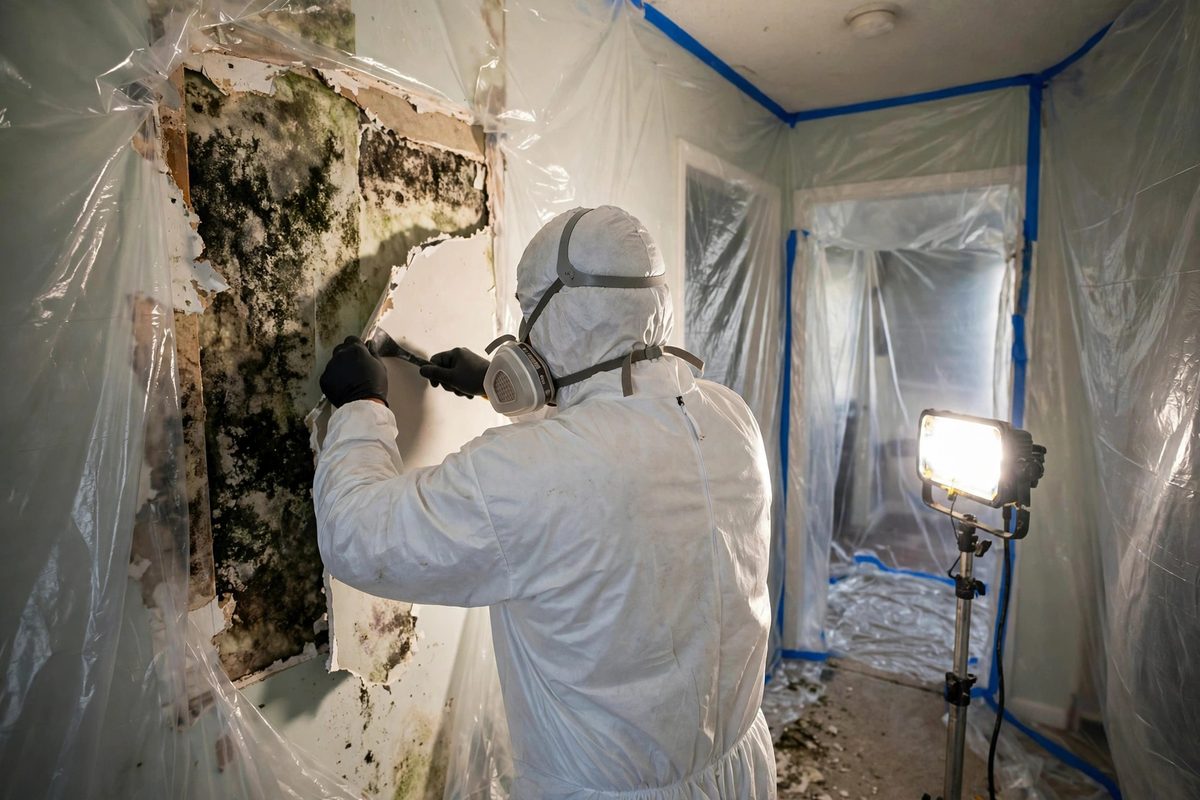
Containment comes first on any job beyond a very small spot. The work area is isolated with sheeting so spores disturbed during removal do not spread through the home, and air movement is controlled to keep the rest of the house clean. Workers wear protective gear appropriate to the size of the job, and the home's HVAC is kept out of the work zone where possible.
Removal follows a simple rule: porous materials that are heavily affected — drywall, insulation, carpet padding, and similar items — usually cannot be cleaned reliably and are removed. Hard, non-porous surfaces can often be cleaned. Every removal decision is about the material, not about saving effort: a cleaned porous board that still holds growth will keep the problem alive behind a fresh surface.
After removal comes cleaning of the remaining structure and a drying phase. Surfaces are cleaned, the cavity and framing are dried, and moisture readings are taken until levels stabilize. Only then does rebuilding make sense — new drywall over a damp cavity repeats the original failure. A final check confirms the area is clean, dry, and ready for repair.
Warning signs — mold growth
- Visible spots or discoloration on walls, ceilings, or baseboards. Black, green, brown, or white patches that spread, especially near past leaks.
- A persistent musty odor. A damp, earthy smell in a room, closet, or basement that does not clear with ventilation.
- Growth returning after cleaning. Spots that come back in the same place mean the moisture source is still active.
- Warped or soft drywall and trim. Moisture behind the surface feeds growth you cannot see yet.
- Stains after a leak, flood, or backup. Any area that stayed wet for days is a candidate for growth, even if it looks dry now.
- Condensation on windows, walls, or pipes. Ongoing surface moisture gives mold the water it needs.
- Allergy-like irritation that eases away from home. Not a diagnosis, but a pattern worth mentioning on the call alongside visible signs.
- Growth in closets, basements, or behind furniture. Low-airflow, undisturbed spaces are where growth is found latest.
Common causes in Herriman-area homes
Most Herriman mold jobs trace to a past water event that was never fully dried: a slow plumbing leak, a ceiling leak, a basement seep, an appliance hose failure, or a flood that was mopped up at the surface while the wall cavity stayed wet. Mold does not need a dramatic flood; a small, steady moisture source over weeks is enough.
Basements and closets deserve special attention. Basements sit against soil moisture and can seep at the wall-floor joint or through window wells, while closets combine low airflow with nearby bathroom plumbing and stored items that hold moisture. In both cases, growth is often well established before anyone notices a smell or a spot.
Humidity and condensation complete the picture. Bathrooms without adequate ventilation, cold water lines sweating in summer, and rooms kept closed for long periods all hold surface moisture. Remediation that fixes the leak but leaves the humidity problem will see growth return in the same corner.
Safe first steps before anyone arrives
Do not scrub, sand, or tear out large areas of growth yourself. Disturbing mold releases spores into the air and can spread the problem through the home. Small surface spots can be left alone until assessed, and the area should be kept as undisturbed as possible.
- Stop the water source if you can do so safely — a shutoff, a moved appliance hose, or a contained drip.
- Keep the area closed off where possible and avoid running the HVAC fan that serves the room.
- Photograph the growth and the surrounding area, including any nearby plumbing or past leak stains.
- Note the history: when the leak or flood happened, how long the area stayed wet, and whether the spot has returned before.
- Move soft items (clothes, bedding, stored boxes) out of the immediate area only if you can do so without spreading dust.
The visit step by step
- Assess the growth, the affected materials, and the moisture source behind them.
- Set containment and protect the rest of the home before any removal begins.
- Remove porous materials that cannot be cleaned reliably; bag and dispose of them from the contained area.
- Clean hard surfaces and remaining structure within the contained zone.
- Dry the area and verify with moisture readings until levels stabilize.
- Check adjacent spaces — the other side of the wall, the room above or below — for spread.
- Confirm the area is clean and dry before any rebuilding or repainting.
- Discuss the moisture fix that prevents return: source repair, ventilation, or drainage attention.
Cost factors (no prices listed)
| Factor | What it changes |
|---|---|
| Affected area size | A closet corner differs from a full basement wall or several rooms. |
| Material types | Drywall and insulation removal differs from cleaning hard surfaces. |
| Containment needs | Larger jobs need more isolation and air control. |
| Moisture source | A fixed leak differs from an ongoing seep that needs more work. |
| Drying extent | Surface drying differs from cavity and framing drying. |
| Rebuilding scope | Replacement drywall and finishes depend on how much was removed. |
We do not publish dollar amounts. Confirm scope on the call at (801) 555-0132.
When mold needs urgent attention
Rapidly spreading growth, growth near HVAC intakes or bedrooms, sewage-related contamination, and any situation where water is still active all justify a prompt call. Do not disturb the area, keep it closed off, and call (801) 555-0132. For active water, see emergency water extraction first.
FAQ — Mold Remediation
Is mold remediation the same as mold removal?
Mostly, but remediation is the fuller term: it includes finding the moisture source, containment, removal, cleaning, and drying — not just taking out what you can see.
Can I just bleach the mold and repaint?
Bleach on a porous surface rarely reaches growth inside the material, and paint over growth hides it without removing it. If the moisture source is still active, growth returns in the same spot.
Do I need mold testing before remediation?
Not always. When growth is visible and the source is clear, remediation can proceed without testing. Testing helps when growth is suspected but hidden, or when you need a before-and-after comparison — see mold testing.
How do I know if the mold is dangerous?
That question needs a qualified professional or health provider, not a website. What a remediation visit can tell you is the extent, the material affected, and the moisture source — and that is what the plan is built on.
Will the mold come back after remediation?
It should not, if the moisture source is fixed and the area is dried and verified. Return growth almost always means water is still reaching the spot.
What should I have ready when I call?
Where the growth is, how large it looks, any past leak or flood in that spot, whether it has returned before, and your Herriman-area ZIP. Photos help triage.
Related services
Continue with Mold Inspection, Mold Testing, Basement Mold Removal, Closet Mold Removal. Return to water damage repair in Herriman for the full overview.
Herriman notes for mold remediation
For mold remediation in Herriman, UT, the moisture history matters more than the mold you can see. Most jobs here follow a leak that was handled at the surface — a mopped floor, a repainted ceiling, a dried carpet — while the wall cavity or the slab edge stayed wet. Ask when the water event happened and how long the area stayed damp; that timeline predicts how far growth has traveled better than the visible patch does.
Basements and closets are the two places Herriman growth hides longest, because both combine low airflow with nearby water paths. If growth is in a closet that shares a wall with a bathroom, check the plumbing side before assuming humidity alone. If it is in a basement, check the wall-floor joint and window wells before assuming a one-time event.
When comparing options, weigh containment and drying verification against speed. A fast wipe-down without containment spreads spores, and rebuilding over damp framing repeats the failure. A plan that names the moisture fix, isolates the work, and verifies dryness is the one that holds — call (801) 555-0132 to start mold remediation in Herriman, UT.