
What flooded basement cleanup means
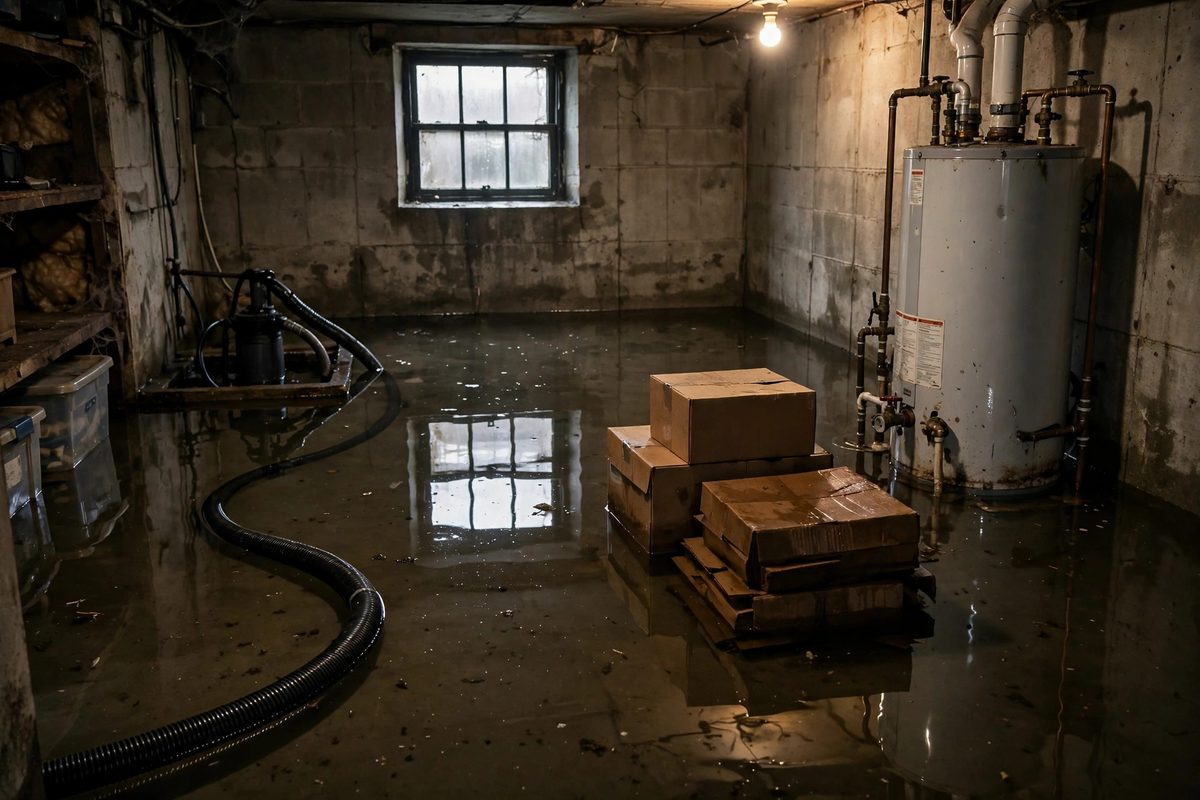
A flooded basement means standing water on the basement floor, whether from a burst pipe, an appliance failure, a sump problem, a sewer backup, or storm and seepage water. The cleanup sequence is the same in outline for all of them — extraction, removal, cleaning, drying — but the details change with the water type, and sewage-contaminated floods follow the stricter sewage backup cleanup rules throughout.
Basements complicate every phase. They sit below grade, so water pools rather than drains; they hold the home's mechanical systems, stored belongings, and often finished rooms; and they dry slowly because airflow and sunlight are limited. A basement that looks dry at the surface can hold moisture in wall cavities, under flooring, and in stored materials for weeks.
This page covers the full sequence, what happens to contents and finished walls, and how to tell when a basement is actually dry rather than merely surface-dry. If water is still entering, if sewage is involved, or if water reaches electrics or gas equipment, keep people out and call (801) 555-0132 promptly.
How flooded basement cleanup works
Extraction comes first and sets the pace for everything else. Pumps handle deep water; extractors and wet vacuums follow for the remainder and for absorbed water in flooring and materials. In a basement, extraction also means checking the sump pit, floor drains, and window wells, because a basement that cannot drain will refill as fast as it is pumped.
Removal follows, and it is where most basement jobs are won or lost. Saturated carpet padding, soaked lower drywall, wet insulation, and ruined stored items are taken out, because none of them dry reliably in place and all of them feed mold if left. Finished basements usually need flood cuts along affected walls — straight cuts above the moisture line — so the cavity behind the board can dry too.
Cleaning and drying come last and take the longest. Hard surfaces are cleaned, and where contamination was involved, disinfected. Drying runs with dehumidification and air movement until readings on walls, floors, and cavities stabilize — not until the floor feels dry. A basement declared dry on a surface check alone will usually show growth within weeks.
When a basement flood needs professional cleanup
- Standing water of any depth. Even an inch across a basement floor saturates far more material than it appears to.
- Water that returns after pumping. Refilling water means the source or the drainage path is still active.
- Sewage odor or visible waste. Contamination changes the entire sequence — do not treat it as clean water.
- Finished walls or flooring affected. Finished basements hide water in cavities and under flooring.
- Water near the furnace, water heater, or electrical panel. Safety risks that come before any cleanup step.
- Stored belongings soaked. Boxes, furniture, and stored items wick water and hold it long after the floor dries.
- Musty odor developing after the water recedes. Odor after a flood usually means cavity or material moisture remains.
- Previous floods in the same basement. Repeat flooding points at a drainage or source problem worth naming.
Common causes in Herriman-area homes
Plumbing failures inside the basement are a leading cause: water heaters, softeners, laundry connections, and floor drains all live in basements, and their failures flood the lowest room first. A water heater failure in a basement can release its full contents onto the floor before anyone upstairs notices.
Sump and drainage failures are the second cause. A sump pump that stops, a discharge line that freezes or clogs, or a window well that fills faster than it drains all send water into the basement from below or from the side. These failures often arrive during storms or thaw, when the basement needs its drainage most.
Storm and seepage water is the third cause: heavy rain, rapid thaw, and groundwater pressure push water through the wall-floor joint, foundation cracks, and window wells. Seepage floods are usually shallower than plumbing floods but wider, and they return with the next storm unless the drainage path is addressed.
Safe first steps before anyone arrives
Do not enter a flooded basement where water may reach the electrical panel, furnace, or outlets, and do not enter sewage-contaminated water at all. Basement floodwater of unknown depth and contamination is not a wading problem — it is a safety problem.
- Shut off power to the basement only if the panel is dry and reachable without entering water.
- Shut off the water source if you can reach it safely and the source is inside the home.
- Keep people and pets out of the flooded area, especially children.
- Photograph water depth, the spread, and the apparent source from the stairs or doorway.
- Move dry belongings from upper floors out of the path only if you can do so without entering water.
The visit step by step
- Confirm safety around electrics, gas equipment, and water depth before entering.
- Identify the water source and type: plumbing, sump or drainage, storm or seepage, or sewage.
- Extract bulk water, checking sump pits, drains, and window wells as the level falls.
- Remove saturated padding, lower drywall, wet insulation, and ruined stored items.
- Make flood cuts above the moisture line on affected finished walls.
- Clean and, where contamination was involved, disinfect hard surfaces.
- Dry with dehumidification and air movement until wall, floor, and cavity readings stabilize.
- Name the source or drainage fix that prevents the next flood before rebuilding.
Cost factors (no prices listed)
| Factor | What it changes |
|---|---|
| Water depth and area | A shallow corner differs from inches across a full basement. |
| Water type | Clean water differs from gray water and from sewage-contaminated water. |
| Finished vs unfinished | Finished walls and flooring add removal and rebuilding scope. |
| Contents volume | Stored belongings scale with what was soaked. |
| Drying duration | Basements dry slower, so drying scope differs from upper rooms. |
| Source or drainage fix | A stopped leak differs from a sump or drainage problem needing more work. |
We do not publish dollar amounts. Confirm scope on the call at (801) 555-0132.
When a flooded basement is an emergency
Water near electrics or gas equipment, sewage contamination, water still rising, and any flood affecting living space all justify an urgent call. Keep people out of the water and call (801) 555-0132. For rapid removal, see emergency water extraction.
FAQ — Flooded Basement Cleanup
Can a flooded basement be saved, or is it ruined?
Most flooded basements can be brought back to dry and usable. The outcome depends on water type, how long materials stayed wet, and whether drying is verified — not on how dramatic the flood looked.
How long does basement drying take?
Longer than an upper room, because basements have limited airflow and sunlight. Drying runs until readings stabilize, not until the surface feels dry — the visit can scope the timeline once the footprint is mapped.
Do finished basement walls always need to be cut?
Not always, but often. Lower drywall that stayed wet, plus the insulation behind it, usually cannot dry reliably in place, so flood cuts above the moisture line are common.
What happens to stored items?
They are triaged: hard items can often be cleaned, while saturated porous items usually cannot. Sorting happens so spores and contamination are not spread to clean rooms.
Will my basement flood again?
It depends on the cause. A fixed plumbing failure usually ends the problem; a drainage or seepage cause needs its own fix, or the next storm or thaw can repeat the flood.
What should I have ready when I call?
The water source if known, depth and spread, whether sewage is involved, whether electrics or gas equipment are affected, whether the basement is finished, and your Herriman-area ZIP.
Related services
Continue with Emergency Water Extraction, Basement Mold Removal, Sewage Backup Cleanup, Water Damaged Drywall Repair. Return to water damage repair in Herriman for the full overview.
Herriman notes for flooded basement cleanup
For flooded basement cleanup in Herriman, UT, the sump and the window wells are the two details that most often decide whether a basement stays dry after cleanup. A basement pumped dry while its sump is stopped or its wells are still holding water will refill, and a cleanup scoped without checking them is scoped to fail. Say whether the flood followed a storm or thaw, and whether the sump was running — those two facts separate a plumbing flood from a drainage flood faster than anything else.
Finished basements add the second Herriman note: the visible floor is the least of the job. Lower drywall, insulation, and the wall cavity hold water long after the floor is pumped, and a basement declared dry on a surface check will usually show growth within weeks. Flood cuts and cavity readings are not extras in a finished basement — they are the job.
When comparing options, weigh the drying verification and the named prevention fix against a fast pump-and-go. A basement extracted, opened where needed, dried to verified readings, and given a source or drainage plan is a basement that stays usable. A basement pumped and closed up damp is a mold job waiting for its season, so call (801) 555-0132 to start flooded basement cleanup in Herriman, UT.