
What mold testing means
Mold testing collects samples — usually from the air, sometimes from surfaces — and has them analyzed to identify the types and amounts of mold spores present. Air samples are typically compared with an outdoor control sample taken at the same time, because outdoor air always carries spores; the comparison, not any single number, is what makes a result meaningful.
Testing is most useful in three situations: when mold is suspected but not visible, when you need to know whether a remediation job actually cleared the air, and when a landlord, buyer, or insurer needs documented results. When growth is already visible and the source is obvious, testing adds little — remediation can proceed on what the eye and the moisture meter already show.
This page covers the sample types, what results can and cannot say, and when testing is worth it versus when inspection alone is the smarter first step. Testing does not diagnose health conditions, and no result by itself declares a home safe or unsafe — those judgments need a qualified professional reading the full picture.
How testing works
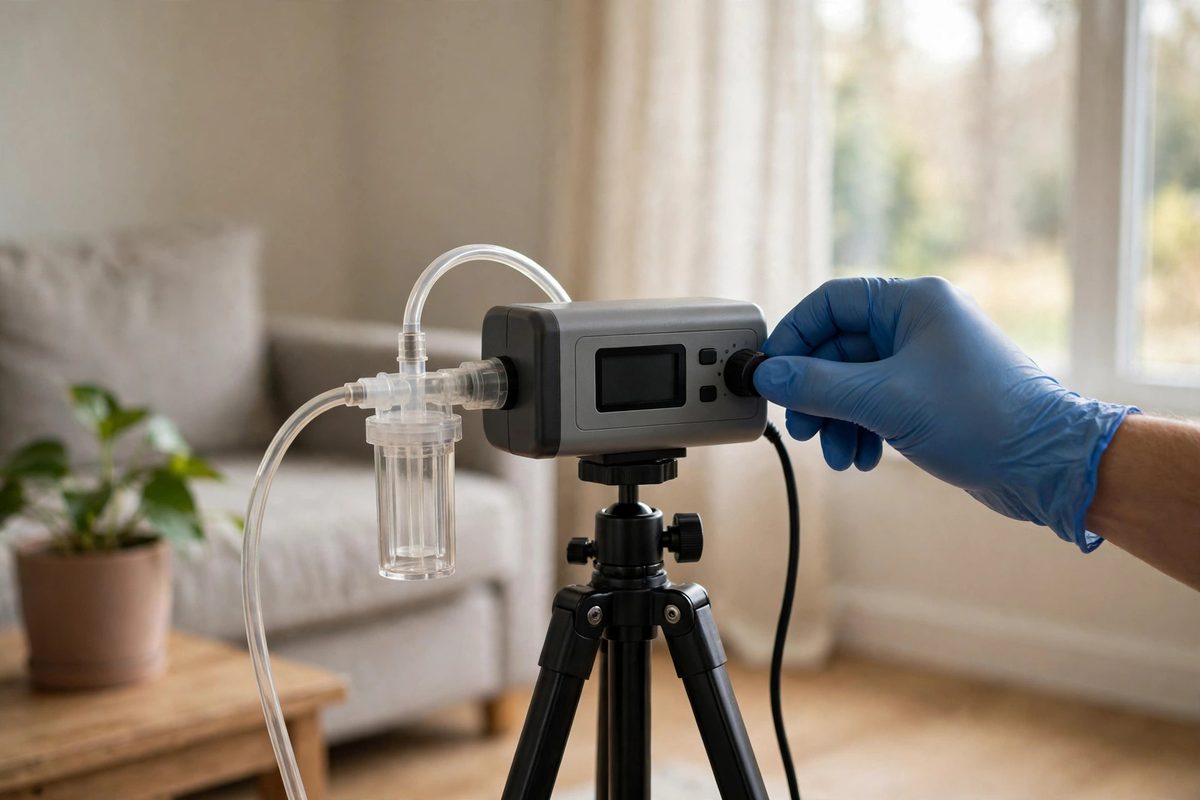
Air sampling is the most common method. A calibrated pump draws a measured volume of air through a cassette that traps spores on a slide, and the sample goes to a laboratory for identification and counting. Samples are usually taken in the complaint area, in an unaffected indoor area for comparison, and outdoors as the control — all within a short window so conditions match.
Surface sampling covers what air sampling cannot: a swab, tape lift, or bulk piece of material from a visibly affected spot identifies what is growing on that surface. Surface results confirm the organism on the material, while air results show what is airborne at sampling time. The two answer different questions, and a good testing plan says which question it is answering before any pump runs.
Results arrive as a laboratory report listing spore types and concentrations, with the indoor-to-outdoor comparison highlighted. A careful reading looks at the pattern: indoor types that mirror outdoor types at similar or lower levels usually reflect normal outdoor influence, while indoor types absent outdoors, or indoor levels far above outdoor levels, point to an indoor source that needs investigation.
When testing is worth considering
- A musty odor with no visible growth. Testing can point to a hidden source area when inspection alone cannot find it.
- Symptoms that ease away from home. A pattern worth documenting, even though testing alone cannot prove a health link.
- After remediation, before rebuilding. Clearance-style sampling checks whether airborne levels have returned to a normal pattern.
- A real estate or rental question. Documented results give buyers, sellers, and landlords a shared factual base.
- Growth that keeps returning. Sampling can show whether the same indoor source is still active after a previous cleanup.
- Hidden areas after a leak. Wall cavities, attics, and crawl spaces cannot be sampled directly, but nearby air samples can suggest whether to open them.
- Insurance or warranty documentation. A dated laboratory report records conditions at a point in time.
- Peace of mind after a flood. When drying is complete but worry remains, numbers can confirm the air pattern is normal.
What testing cannot tell you
Testing cannot find a leak. It measures spores, not water, so a normal result does not rule out a hidden moisture problem, and an elevated result does not locate the source. Inspection and moisture mapping still do that work — testing complements them, it does not replace them.
Testing also cannot prove that mold caused any symptom, and it cannot declare a home safe or unsafe on its own. Indoor spore levels shift with seasons, weather, open windows, HVAC use, and activity in the room, so a single sample is a snapshot, not a verdict. Anyone selling a test as a health diagnosis or a pass-fail safety verdict is overselling it.
Finally, testing cannot see inside walls. Air samples near a suspect wall can suggest a hidden source, but confirming it still requires opening or inspecting the cavity. A testing plan that skips inspection and goes straight to sampling usually wastes the fee.
Safe first steps before testing
Do not disturb suspect growth before sampling — scrubbing or tearing material changes the airborne picture and makes results harder to interpret. Keep the area as it normally is, and note anything that could affect the sample.
- Keep windows and doors in their normal positions; do not air the house out specially before the visit unless asked.
- Note recent cleaning, painting, or renovation in the sample areas — all of it shifts results.
- List the complaint areas in order: where odor is strongest, where growth was seen, where water events happened.
- Do not run air purifiers in the sample rooms right before testing unless that is the normal state.
- Have the leak or flood history ready: dates, what got wet, and how it was dried.
The visit step by step
- Walk the home and note complaint areas, past water events, and visible growth.
- Decide the sampling plan: which rooms, which sample types, and which outdoor control point.
- Record indoor and outdoor conditions at sampling time for the laboratory report.
- Collect air and surface samples without disturbing suspect materials first.
- Send samples to the laboratory and explain the expected turnaround.
- Review the report against the inspection findings and the indoor-outdoor comparison.
- Recommend next steps: remediation, further inspection, or no action beyond moisture control.
- Provide the written report for your records, insurer, or landlord as needed.
Cost factors (no prices listed)
| Factor | What it changes |
|---|---|
| Number of samples | Each room and control sample adds laboratory analysis. |
| Sample types | Air cassettes differ from surface and bulk samples in handling. |
| Laboratory turnaround | Standard analysis differs from expedited reporting. |
| Inspection pairing | Testing alone differs from testing combined with a full inspection. |
| Report detail | A simple result list differs from an interpreted report with recommendations. |
| Follow-up sampling | Clearance sampling after remediation is a separate round. |
We do not publish dollar amounts. Confirm scope on the call at (801) 555-0132.
When testing is not the urgent step
If water is still active, if sewage is involved, or if growth covers a large area, act on the water and the growth first — testing can follow. Call (801) 555-0132 and describe the active problem; for standing water, see emergency water extraction. Testing is a measurement tool, not an emergency response.
FAQ — Mold Testing
Do I need testing if I can already see mold?
Usually not. Visible growth with a clear moisture source can go straight to remediation. Testing adds value when growth is hidden, when results are needed for documentation, or for post-remediation clearance.
What does a mold test actually measure?
The types and amounts of mold spores in the sampled air or on the sampled surface at that moment. Air results are read against an outdoor control sample taken at the same time.
Can a test say whether mold is making me sick?
No. Testing identifies organisms and levels; it does not diagnose health conditions. Health questions belong to a qualified medical professional.
Why compare indoor results with outdoor air?
Because outdoor air always contains spores. A result is meaningful only against that background — indoor levels far above outdoor, or indoor types absent outdoors, point to an indoor source.
How long do results take?
Turnaround depends on the laboratory and the analysis requested. The visit can confirm the expected timing and whether expedited analysis is available.
What should I have ready when I call?
Complaint areas, odor locations, past leaks or floods, any visible growth, and your Herriman-area ZIP. Note any recent cleaning or renovation in those rooms.
Related services
Continue with Mold Inspection, Mold Remediation, Basement Mold Removal, Closet Mold Removal. Return to water damage repair in Herriman for the full overview.
Herriman notes for mold testing
For mold testing in Herriman, UT, the outdoor control sample matters more than most people expect. Herriman sits in a valley setting where outdoor spore levels shift with season and weather, so an indoor number without an outdoor comparison taken the same day is nearly meaningless. Any testing plan that skips the outdoor control is not a plan worth paying for.
Testing is most often useful here after a leak that was dried at the surface but never checked inside the wall, or after remediation when a homeowner wants documented clearance before rebuilding. In both cases, pair testing with inspection: the sample says what is airborne, the inspection says where the water came from, and only the two together produce a decision.
When comparing options, weigh the sampling plan against the question you actually need answered. A single air sample rarely answers anything; a small set — complaint area, unaffected indoor area, outdoor control — usually does. Call (801) 555-0132 to discuss whether testing fits your situation in Herriman, UT.