
Why Bluffdale water damage looks the way it does
Low ground is the defining fact for Bluffdale water damage. Homes on lower ground collect storm water and groundwater sooner than homes on higher ground, and their basements and lower levels see seepage first — at the wall-floor joint, at window wells, and at any low wall section. A storm that leaves higher homes dry can still push water into a low home's lower level, which is why storm size alone never predicts Bluffdale damage.
Mixed housing is the second pattern. Bluffdale homes range from older builds with aging plumbing and finishes to newer builds with closed cavities and modern systems, and each type fails differently. Older homes show water damage more visibly but on already-weakened materials; newer homes hide it longer in cavities. A visit that assumes one type will mis-scope the other half of the town.
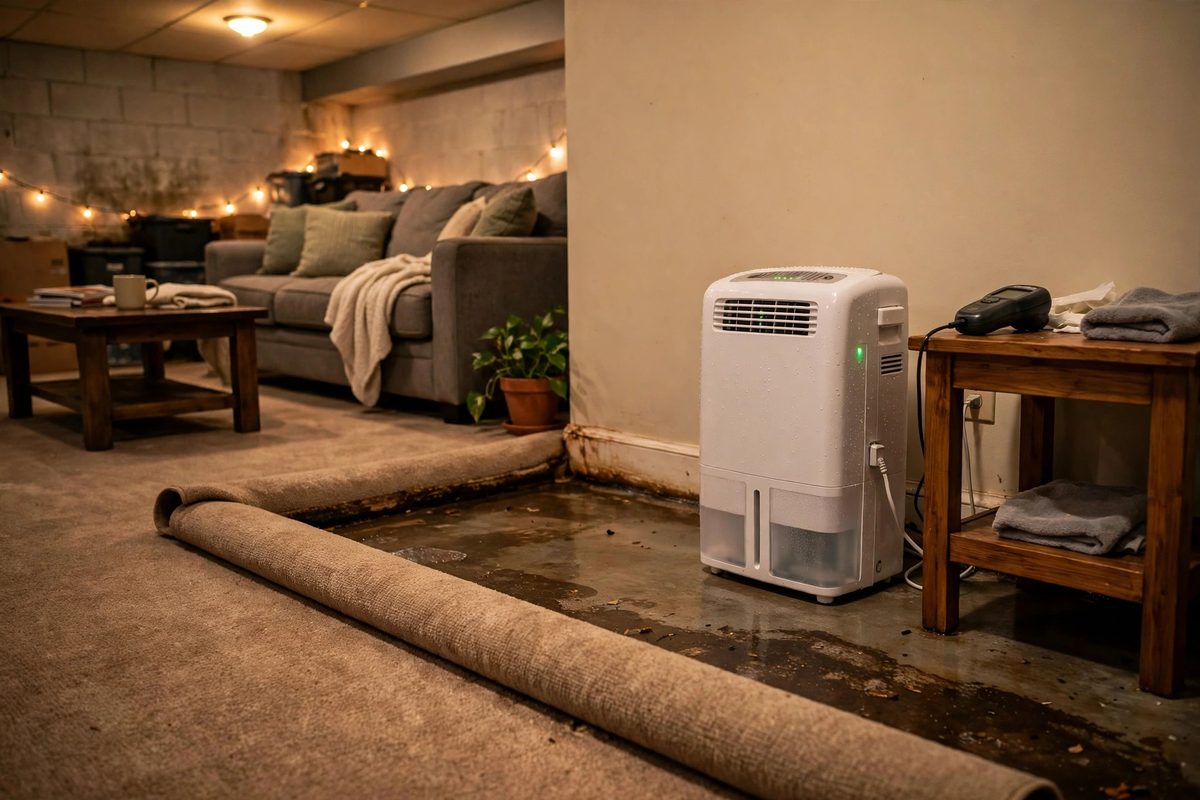
Lower-level living completes the set. Many Bluffdale lower levels are finished or semi-finished, so water that arrives at the lowest level hides behind drywall and under flooring instead of showing on bare concrete. The damage is discovered later, the cavity has been wet longer, and the repair involves opening walls rather than just drying a floor — a pattern that rewards early moisture checks over late cosmetic fixes.
What to check first in Bluffdale
- Walk the ground around the home after storms. Low spots and collection points explain lower-level moisture.
- Check the wall-floor joint and window wells. Low ground pushes water at exactly these two places first.
- Note the home's age and basement type. Older and newer homes, finished and unfinished basements, need different checks.
- Note whether moisture follows storms or stays constant. Storm-linked moisture points at ground and drainage; constant moisture points at plumbing.
- Photograph stains together with the outside ground above them. The outside picture often explains the inside stain.
Services Bluffdale residents most often need
- Flooded Basement Cleanup — Lower-level flooding from storms, seepage, or plumbing, cleaned in sequence.
- Basement Mold Removal — Growth on low walls and joints, traced to ground, seep, or humidity paths.
- Mold Inspection — Lower levels mapped with readings, including finished walls and joints.
- Emergency Water Extraction — Standing water removed before it saturates finishes further.
- Water Damaged Drywall Repair — Wet lower drywall assessed, cut where needed, and restored.
- Sewage Backup Cleanup — Contaminated backups handled with isolation, removal, and disinfection.
A Bluffdale checklist that actually helps
- Know your ground: which sides of the home sit low and where water collects after storms
- Check window wells and the wall-floor joint after rain, not just during it
- Note whether moisture follows storms, stays constant, or follows fixture use
- Keep the area below a stain clear so the drip path stays visible
- Photograph stains together with the outside ground and grade above them
- Keep storage off lower-level floors and away from below-grade walls
Nearby areas
Also see Mountain Ridge, Boulders, Riverton, South Jordan. The water damage patterns overlap across the Herriman edge, but the layout — and therefore the first check — changes from one community to the next.
FAQ — Bluffdale
Do you cover water damage calls in Bluffdale?
Yes — Bluffdale, southeast of Herriman, is covered on the Herriman call line, (801) 555-0132. Give your ZIP when you call so the visit is routed correctly.
Why does low ground matter for water damage?
Lower ground collects storm water and groundwater sooner, so basements and lower levels on low ground see seepage first — at joints, wells, and low wall sections — even in storms that leave higher homes dry.
Is storm-linked moisture different from plumbing moisture?
Yes. Storm-linked moisture follows weather and points at ground, drainage, and wells; constant moisture points at plumbing. Timing separates the two causes.
Why is finished lower-level damage discovered later?
Because finished walls hide water in cavities behind drywall. The room-side surface can look fine while the cavity stays wet, so discovery waits for a stain, a warped baseboard, or a smell.
Should I seal a damp lower wall from inside?
Not as a first step. Interior sealant over an active ground-driven seep traps water behind the coating. The ground, well, or drainage path needs attention first.
What should I tell you when I call from Bluffdale?
Whether the home sits low, which level got wet, whether moisture follows storms or stays constant, whether the lower level is finished, and your ZIP. Photos inside and outside help triage.
Bluffdale notes for water damage repair
For water damage repair in Bluffdale, UT, the ground is the detail that matters most. Low ground does not just add water — it changes which homes get wet first, which walls seep first, and which storms matter. A storm that leaves higher ground dry can still push water into a low home's lower level, so storm size alone never predicts Bluffdale damage, and a plan that ignores the ground will be surprised by the next storm.
Mixed housing is the second detail, because it defeats generic scoping. Older homes show water on weakened materials, newer homes hide it in cavities, and finished lower levels hide it further still — three different assessments for three different homes on the same street. A visit that starts from the actual home, its age, and its basement type scopes honestly; a visit that assumes one pattern mis-scopes the rest.
When comparing options, weigh the ground and drainage path against a fast interior fix. A lower wall dried and repainted while low ground still pushes water at it will dampen again with the next storm, while a plan that names the collection point, the well, or the joint path holds through seasons. Document stains with ground context, and call (801) 555-0132 to start water damage repair in Bluffdale, UT.