
What we do
Herriman Water Damage Co is a water-damage service for Herriman, UT and nearby communities. The homes here are mostly newer builds, and that shapes the work: two-story layouts put bathrooms and laundry above living spaces, closed wall and ceiling cavities hide moisture longer, and garage utility rooms hold the equipment that fails quietly. The service list follows from those patterns rather than from a generic menu.
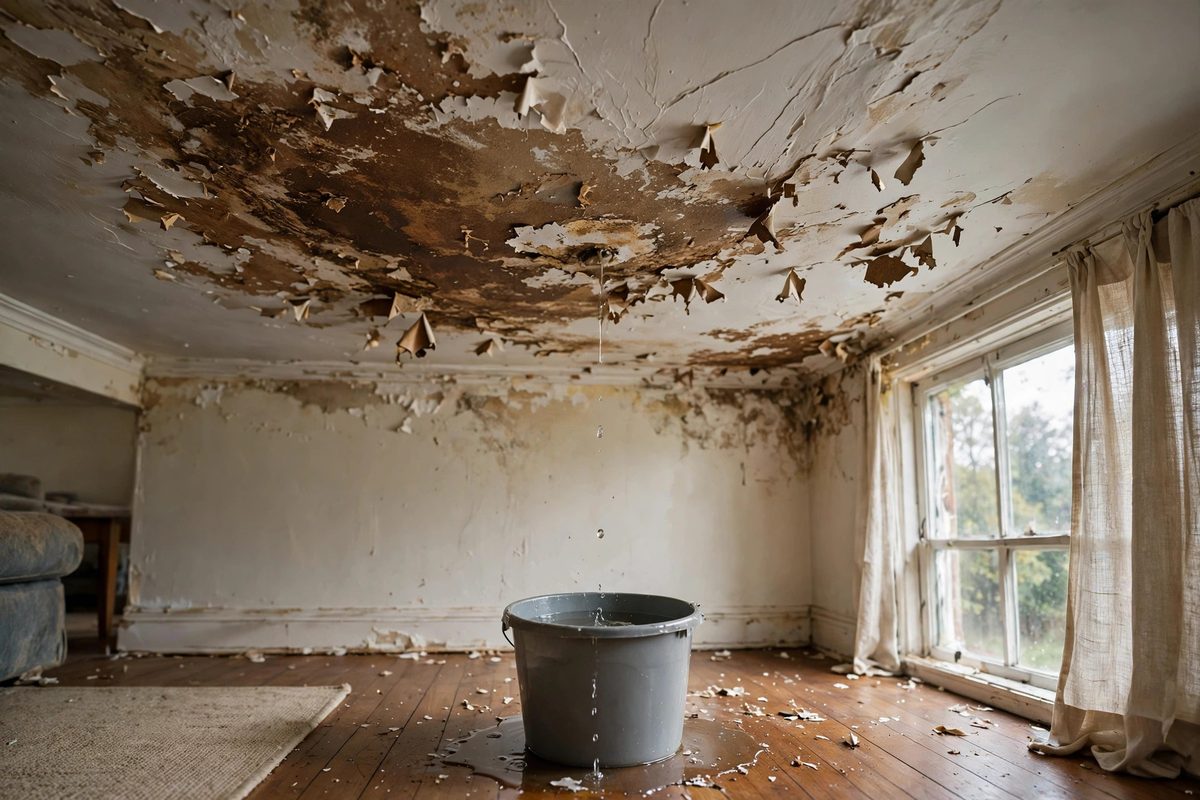
Three kinds of calls make up most of the work. The first is the ceiling call: a stain or drip downstairs that traces back to a room upstairs. The second is the hidden-moisture call: a musty odor, a stain with no obvious source, or growth found during other work. The third is the standing-water call: a flooded lower level, a sewage backup, or a leak spreading faster than towels can hold. Each kind gets the same order of operations, because the order is what keeps a leak from becoming a mold job.
Our approach: stop it, map it, verify it
- Stop the water. The source comes first when it can be reached safely — a shutoff, a moved appliance hose, or a contained drip — because drying a room that is still taking on water wastes the whole visit.
- Map the moisture. The visible damage is only the start. Wall and ceiling cavities, flooring, and insulation are checked for the wet footprint, since water travels inside a home along paths that do not match the stain on the surface.
- Verify drying. Nothing is closed up on appearance alone. Moisture readings confirm the cavity is dry before drywall, paint, or flooring goes back, so the repair does not stain again or support growth in the dark.
How a call works
- You describe the damage. Where the water or stain is, when it appeared, what sits above or beside it, and whether sewage is involved.
- Triage questions follow. Timing matters most: stains tied to fixture use point at plumbing, stains tied to rain point at the roof or exterior, and stains with no pattern point at a hidden source.
- The visit is planned around the pattern. A ceiling stain sends the first check to the room above; a flooded lower level sends it to extraction first.
- On site, the source is found before the repair. Patching a ceiling without finding the room above only buys time until the stain returns.
- Close-up waits for verification. Drying readings, not a dry-looking surface, decide when the job is done.
Services
- Ceiling Water Damage Repair — Stains, sagging, and drips traced back to the room above.
- Mold Remediation — Growth after a leak that stayed wet inside a closed cavity.
- Mold Testing — Testing when growth is hidden or documentation is needed.
- Sewage Backup Cleanup — Backup water kept clear of living areas until it is handled.
- Mold Inspection — Musty odor or stains with no obvious source, mapped before removal.
- Emergency Water Extraction — Standing water and fast-spreading leaks, extracted before drying.
- Basement Mold Removal — Lower-level growth where seepage or humidity feeds the wall-floor joint.
- Water Damaged Drywall Repair — Wet, soft, or stained drywall assessed, dried, and restored.
- Closet Mold Removal — Growth in small closed spaces where airflow is limited.
- Flooded Basement Cleanup — A flooded lower level, from extraction through verified drying.
Areas we serve
- Rosecrest
- Mountain Ridge
- Hidden Oaks
- Herriman Towne Center
- Kings Canyon
- Capitol Reef
- Boulders
- Riverton
- Bluffdale
- South Jordan
Daybreak is covered inside the South Jordan page, since Daybreak sits within South Jordan. Give your ZIP when you call so the visit is routed correctly.
FAQ — About
What does Herriman Water Damage Co do?
We handle water damage calls across Herriman, UT and nearby communities: ceiling leaks, mold, extraction, sewage backup, and flooded basements. Every call follows the same order: stop the water, map the moisture, and verify drying before anything is closed up.
Which areas do you serve?
Herriman is the home base, in ZIP 84096, and the service list covers Rosecrest, Mountain Ridge, Hidden Oaks, Herriman Towne Center, Kings Canyon, Capitol Reef, Boulders, Riverton, Bluffdale, and South Jordan. The South Jordan page also covers Daybreak, which sits inside South Jordan.
What happens on a first visit?
The visit starts with the source: where the water is, what sits above or beside it, and when it appears. Then the wet footprint is mapped, including wall and ceiling cavities that look dry on the surface, and a drying plan follows from those readings.
Do you handle both leaks and mold?
Yes. Leaks and mold are usually the same job at different stages: a leak that stays wet inside a closed cavity becomes a mold job. Testing helps when growth is hidden or documentation is needed, while visible growth with a clear source can move straight to remediation.
What should I do before calling?
If it is safe, stop the water at its source, keep clear of water near electrics or gas equipment, and photograph the damage and the apparent source. Note when the water appears and what sits above the wet area — those two details direct the visit.
Why is drying verification important?
Because surface drying is not the same as cavity drying. Walls, insulation, and flooring can stay wet long after the floor feels dry, and closing up a damp cavity invites a stain that returns and growth in the dark. Moisture readings confirm dryness before close-up.
About Herriman Water Damage Co
For water damage help in Herriman, UT, the detail that matters most is the order of operations. A stain in a living room is rarely a living room problem: it is a bathroom, laundry, or mechanical problem one floor up, or a cavity that stayed wet after a leak. Finding the source first, mapping the full wet footprint second, and verifying drying third is what separates a repair that holds from a patch that stains again.
If you are comparing options, weigh drying verification against a fast cosmetic fix. A ceiling closed up while the cavity is still damp will stain again and can support growth in the dark, so a repair that includes moisture readings is worth more than a quick patch. Document the damage with photos before any work, and call (801) 555-0132 to start.