
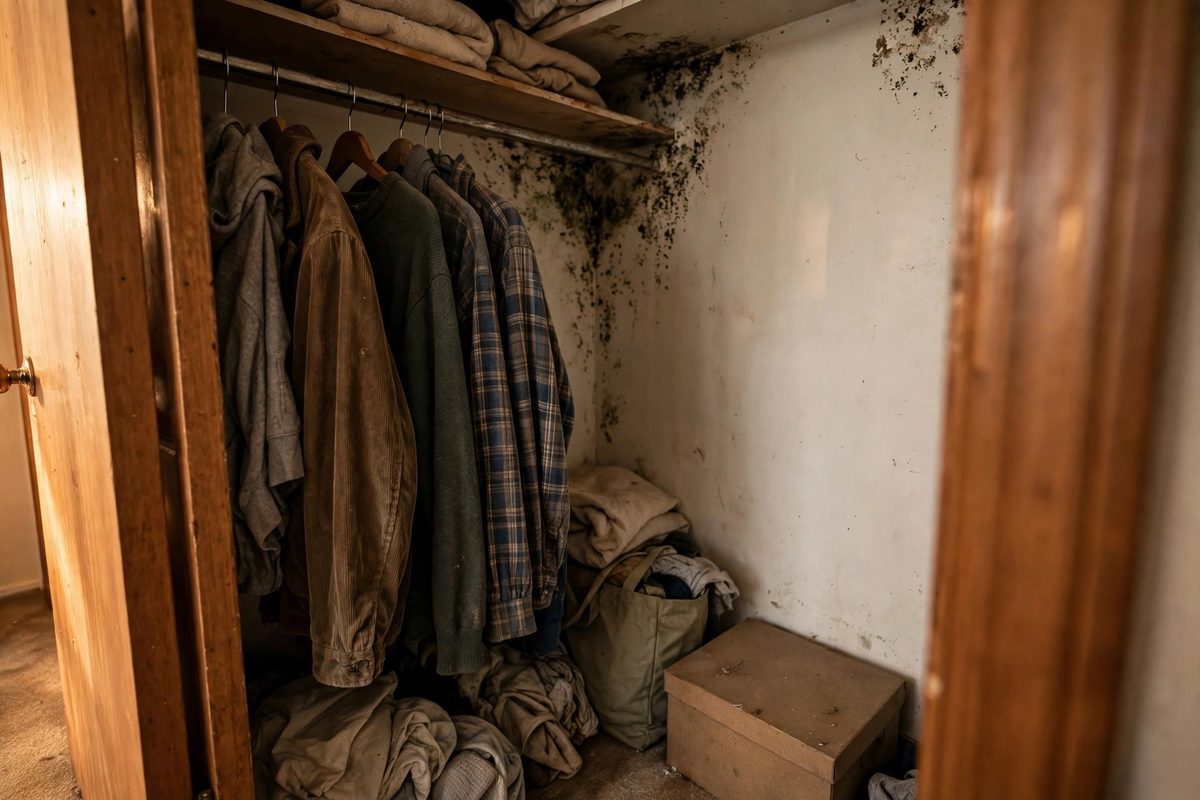
What closet mold removal means
Closet mold removal follows the same principles as mold remediation elsewhere, sized to a small, enclosed space with its own complications: low airflow, stored contents that absorb moisture and spores, and a shared wall that often hides the actual water source. A closet job that cleans only the visible wall while ignoring the plumbing wall behind it will see growth return.
The work therefore covers three things: the growth on closet surfaces, the contents that were stored against them, and the moisture path — which is very often a slow bathroom leak, a condensation problem, or humidity trapped by a closed door. Each of the three needs its own decision, and skipping any one of them leaves the job half done.
This page covers closet-specific sources, what happens to stored clothes and items, and how to keep a closet dry after removal. If growth covers a large area, if it extends beyond the closet, or if water is active, treat it as a larger remediation job — see mold remediation — rather than a closet-only cleanup.
How closet mold removal works
Assessment starts with the shared wall. In most homes, at least one closet wall backs onto a bathroom, a laundry area, or a plumbing chase, and that wall is checked first with moisture readings — on both sides where access allows. A closet that only gets cleaned on its own side while the bathroom side keeps leaking will regrow within weeks.
Contents come next, and they need honest triage. Hard items can usually be cleaned. Soft items that sat against growth — clothes, shoes, stored bedding — are assessed piece by piece: lightly affected items can often be laundered or cleaned, while heavily affected or long-damp items are usually removed. Contents are handled so spores are not spread to clean rooms during the move.
Removal and cleaning follow the standard sequence, sized down: isolate the small space, remove affected drywall sections or shelving where needed, clean hard surfaces, and dry the closet and its cavity with readings to confirm. The door stays open during drying — closing it again too soon is how the next growth cycle starts.
Warning signs — closet mold
- Musty odor when the closet door opens. The most common first sign, often before any growth is visible.
- Spots on the back wall or corners. Growth favors corners and the wall shared with a bathroom.
- Stains or dampness on stored clothes or shoes. Contents against an affected wall show moisture first.
- Warped shelving or baseboards. Wood and trim in the closet wick moisture and warp early.
- Peeling paint or bubbling on closet walls. Moisture pushing coatings off the board.
- Condensation inside the closet. A cold closet wall in a warm home sweats, especially in humid seasons.
- Growth returning after cleaning. Return growth means the shared-wall source or the airflow problem is still active.
- Odor that follows the bathroom. Smell that strengthens after showers points at the shared plumbing wall.
Common causes in Herriman-area homes
The shared bathroom wall is the leading closet mold cause: slow supply or drain leaks, shower surround seepage, and toilet base leaks all feed the closet side of the wall while the bathroom side looks fine. Because closets are rarely inspected, these leaks run longer than leaks in open rooms, and growth is well established by discovery.
Condensation is the second cause, and it needs no leak at all. A closet on an exterior wall, or one with a cold water line running through it, can sweat in humid conditions; with the door closed and no airflow, that surface moisture persists long enough for growth. Closets in corners and on north-facing walls are the usual candidates.
Stored items complete the picture: clothes, boxes, and bedding packed tightly against walls trap moisture and block airflow, turning a minor damp spot into a growth site. A closet packed floor to ceiling against an exterior or bathroom wall is a growth site waiting for a damp week.
Safe first steps before anyone arrives
Do not scrub large growth areas or shake out moldy clothes inside the home — both spread spores to clean rooms. Keep the closet door closed until the visit, and handle suspect contents as little as possible.
- Keep the closet door closed to limit spore movement into bedrooms and living areas.
- Note whether the closet shares a wall with a bathroom, laundry, or exterior wall.
- Photograph the growth, the back wall, and any damp contents without emptying the closet into living areas.
- Do not paint over growth or spray it with household cleaners before assessment.
- Move only clean, dry items out, and bag suspect soft items rather than carrying them through the home.
The visit step by step
- Assess growth, contents, and moisture on the closet walls, including the shared wall.
- Check the bathroom or plumbing side of the shared wall where access allows.
- Identify the moisture path: plumbing leak, condensation, humidity, or past event.
- Isolate the closet and triage contents: clean, launder, or remove.
- Remove affected drywall sections or shelving where needed.
- Clean hard surfaces and dry the closet and cavity, verifying with readings.
- Confirm the shared-wall source is stopped or documented for repair.
- Advise on airflow and storage habits that keep the closet dry afterward.
Cost factors (no prices listed)
| Factor | What it changes |
|---|---|
| Growth extent | A back-wall corner differs from multiple walls or a walk-in closet. |
| Shared-wall involvement | Closet-only work differs from work extending to the bathroom side. |
| Contents volume | A few items differ from a full closet of stored clothes and boxes. |
| Material removal | Drywall sections and shelving scale with what was affected. |
| Drying needs | Surface drying differs from cavity drying behind the closet wall. |
| Source repair | A stopped leak differs from a source needing separate trade work. |
We do not publish dollar amounts. Confirm scope on the call at (801) 555-0132.
When closet mold needs urgent attention
Growth spreading beyond the closet, active water on the shared wall, sewage involvement, or growth in a closet used for a child's room all justify a prompt call. Keep the door closed and call (801) 555-0132. For active water, see emergency water extraction.
FAQ — Closet Mold Removal
Why do closets grow mold so often?
Closed doors, still air, stored items holding moisture, and a shared wall with a bathroom or exterior wall combine to give mold steady moisture and no airflow — the exact conditions it needs.
Can I save clothes that were in a moldy closet?
Often, yes for lightly affected items that can be laundered or cleaned. Heavily affected or long-damp soft items are usually removed. Triage happens item by item, not by blanket rule.
Is the bathroom on the other side of the wall the problem?
Very often, yes — slow plumbing leaks and shower seepage feed the closet side while the bathroom side looks fine. Checking the shared wall is part of every closet job.
Will opening the closet door prevent mold?
Airflow helps, but it does not fix an active leak or a condensation problem. Ventilation is prevention after the source is fixed, not a substitute for it.
Should I use a dehumidifier in the closet?
It can help with humidity-driven growth after the source is fixed, but it will not stop a plumbing-fed leak. The source decision comes first.
What should I have ready when I call?
Which wall the growth is on, what sits on the other side of that wall, whether the closet is on an exterior wall, how full the closet is, and your Herriman-area ZIP.
Related services
Continue with Mold Remediation, Mold Inspection, Basement Mold Removal, Mold Testing. Return to water damage repair in Herriman for the full overview.
Herriman notes for closet mold removal
For closet mold removal in Herriman, UT, the shared wall is the whole job in most cases. Closets that back onto bathrooms hide slow leaks for months because nobody inspects a closet wall, and by the time growth shows on clothes, the bathroom side has been feeding it for a long time. Any closet plan that does not check the other side of the wall is not a plan — it is a cleaning that will need repeating.
Contents triage is the second Herriman-specific note, because closets here tend to be full: stored clothes, shoes, boxes, and bedding packed against the affected wall. Those items are both victims and spreaders — moving them through the home without bagging spreads spores to clean rooms, while leaving them in place keeps moisture against the wall. Bag first, sort second, and only in the contained area.
When comparing options, weigh the shared-wall check and the drying verification against a quick wipe-down. A closet cleaned without its source fixed and its cavity dried will regrow in the same corner, usually within the same season. A job that names the source, triages contents properly, and verifies dryness is the one that keeps the closet usable, so call (801) 555-0132 to start closet mold removal in Herriman, UT.